About Us
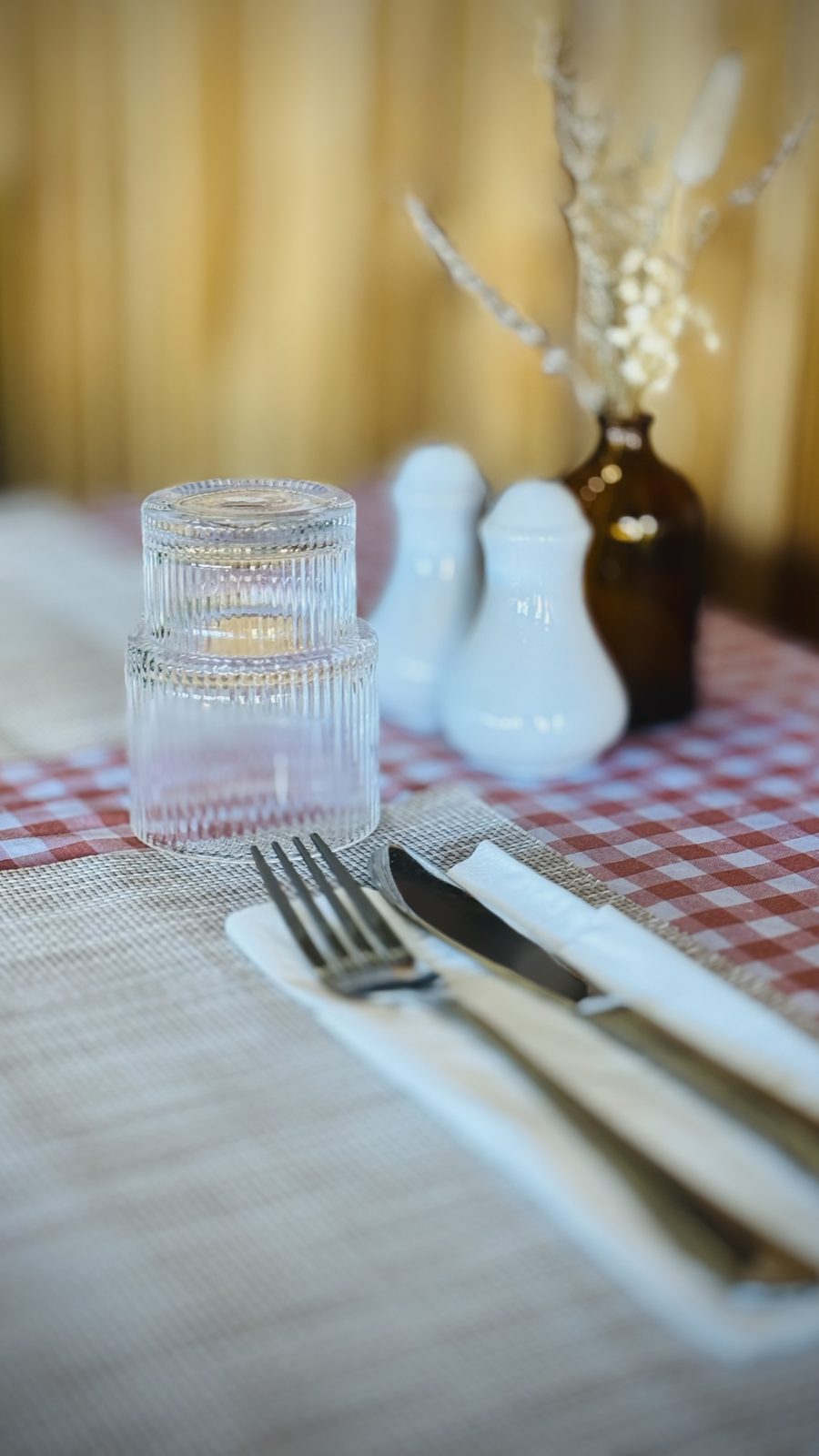
Tchin Tchin was founded by two friends, Nico & Chris, who shared a simple dream: to bring a little piece of France to Bali. Think of it as a real French Brasserie — the kind of place you'd stumble upon along a river bank in France, with checkered vichy tablecloths, wooden tables, and a warm, easygoing atmosphere. Good food, good drinks, and good company.
We believe a meal should feel like at home.
From the moment you sit down, whether it's for a quick espresso, a long lunch under the trees, or an evening of cocktails and olives, we want you to find that same comfort you'd get from a home-cooked French meal.
The kind your mother or grandmother would make, prepared with real care and always done right.
Our menu keeps things honest and generous: hearty pastas, slow-cooked mains, charcuterie and cheese boards built for sharing.
What makes Tchin Tchin special is that balance: traditional French cooking, simple and unpretentious, but never short on flavour.
It's the wooden benches, a good bottle of wine, and a kitchen that treats good ingredients with respect rather than fuss.
A place where you can come as you are, whether in flip-flops or dressed up for a night out, and always leave with a full stomach and a smile.
Tchin Tchin — a taste of home, French country style, Balinese sunset included.
A bit of history ...
Why "Tchin Tchin"?
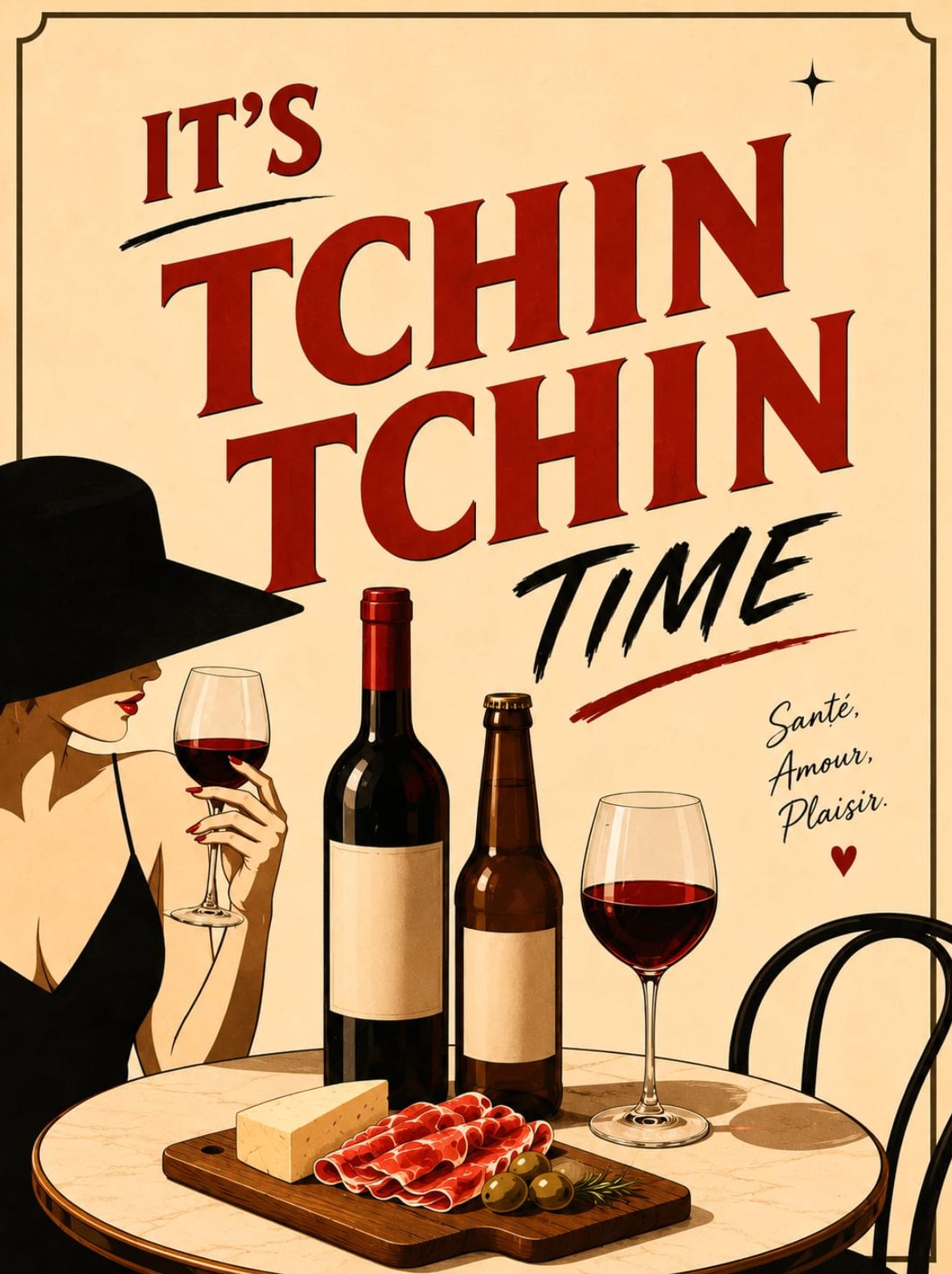
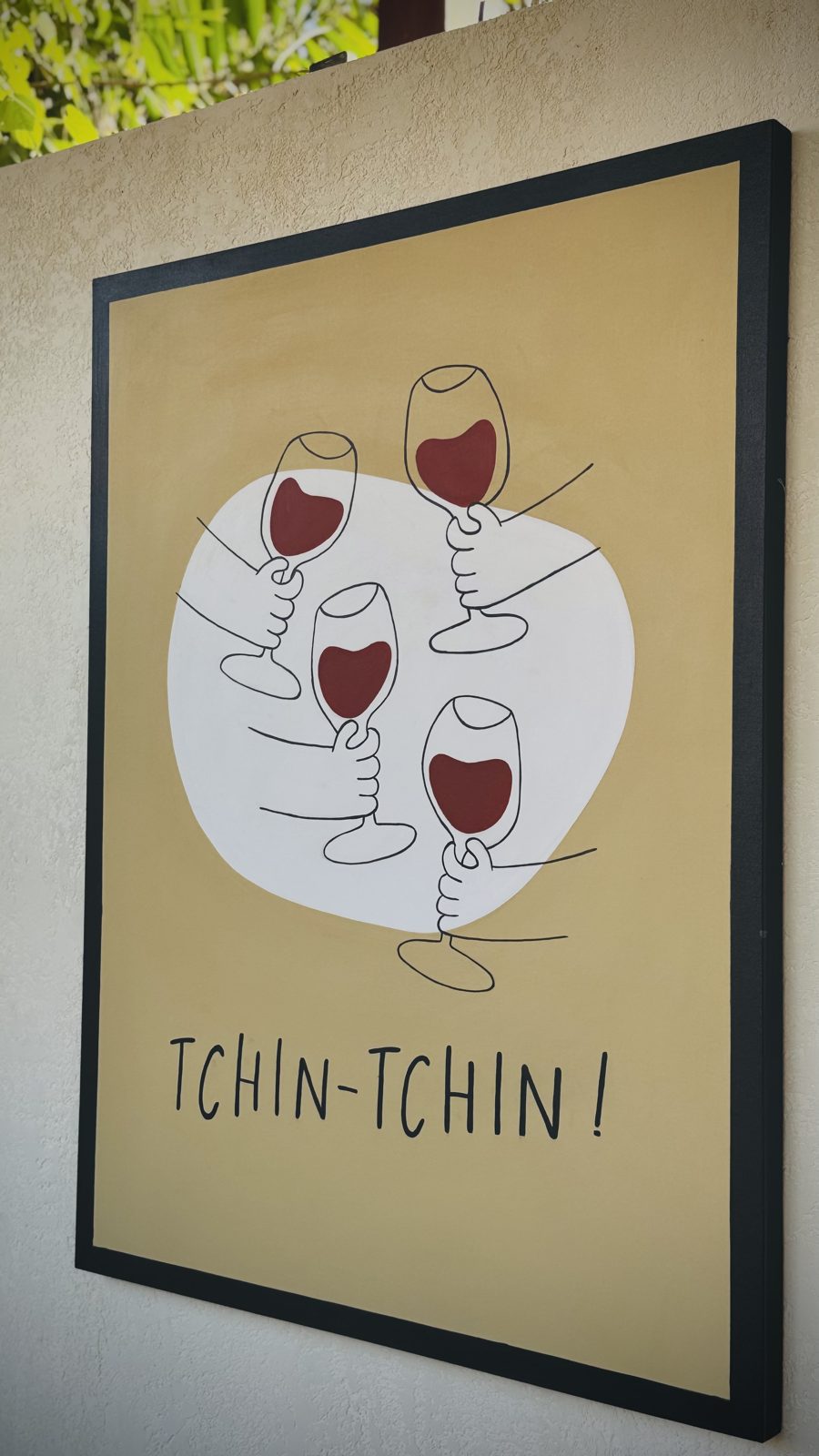
The expression "Tchin Tchin" comes from a Chinese word meaning "please" or "I invite you." Brought back to Europe by sailors and travelers, it became our way of saying "Cheers!" when raising a glass.
Today, Tchin Tchin is above all a phrase that celebrates good meals, good drinks, and good times shared together. So… Tchin Tchin! 🍷
Origin of "Tchin Tchin"
Dating back to the Middle Ages in France—a politically unstable era—clinking glasses was far more than a simple gesture of camaraderie. It was a precautionary measure against poisoning attempts, which were commonplace at the time. This practice of mixing drinks by clinking glasses together quickly emerged as a method of defense against an invisible enemy.
In the Middle Ages, the Kingdom of France was a theater of intense political rivalries, where many were willing to do anything to eliminate their opponents. The use of poison was one of the most devious and effective methods to achieve their dark goals.
Beverages were frequently contaminated, making it impossible to know which glass might be tampered with. Faced with this invisible threat, people swiftly developed a clever technique to counter the deadly effects of poison: by vigorously clinking their glasses against those of their neighbors, they mixed the liquids together, thereby reducing the chances of being targeted by poisoning.
Beyond its protective function, the act of clinking glasses also acquired a powerful symbolic meaning.
Those who shared this gesture demonstrated mutual trust, affirming that they were drinking together without fear of ill intent. It was an act of camaraderie and solidarity that strengthened social bonds. Thus, the simple act of clinking glasses became a symbol of trust and goodwill, transcending its dark and suspicious origins.
Curiously, the appearance of the phrase "tchin-tchin" came much later.
This expression was born over a century ago when the French army was deployed to China. French soldiers were exposed to a Chinese term widely used during festivities: "qing qing." Although this phrase was primarily a polite expression meaning "Hello" or "Please / You're welcome," the soldiers were amused by its unique sound and decided to adopt it to accompany their clinking rituals.
Thus, the ancient tradition of clinking glasses finds its roots in the need for protection against treacherous poisonings in the Middle Ages.
This gesture of mixing drinks evolved into a symbol of trust and solidarity among those sharing the ritual. So, the next time you raise your glass to toast, remember the fascinating story behind this simple yet meaningful gesture—connecting human beings across centuries and cultures.
Contact
Jl. Bumbak Dauh No.4, Kerobokan, Kec. Kuta Utara, Kabupaten Badung, Bali 80361, Indonésie
Monday - Saturday 12pm - 10pm
contact@tchintchin-umalas.com
+62 8 23 26 47 98 32